
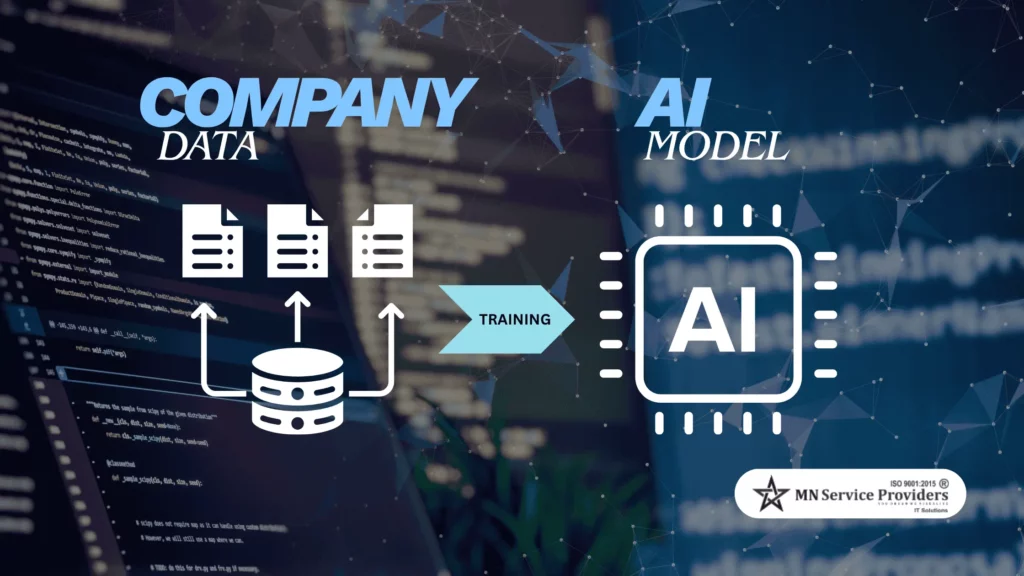
Ever wondered if you could train your own AI model—without shelling out lakhs or wrestling with calculus textbooks? Let’s shatter that myth. Training AI isn’t just for Silicon Valley giants anymore. In 2025, small businesses across India are using AI daily—making decisions, automating boring tasks, and pulling in clients. Most of them? Never wrote a line of complex code. Didn’t own a GPU. Some still don’t know what a “parameter-efficient fine-tuning” is, and that’s perfectly fine.
So, how to train ai model in 2025 is not a puzzle for PhDs—it’s a real path to practical business wins, even for “non-techies.” You’ll go from “where do I start?” to a working AI model by the end of this article. Want proof? Set aside one day. You’ll finish this, try your first model, and probably leave a thank you comment before dinner.
Mindset Shift: The 2025 Reality
Forget everything you’ve heard about training AI being rocket science. The new mindset:
- You don’t need to be a data scientist. Most Indian businesses use prebuilt or fine-tuned AI models, not those Frankenstein monster models cooked up from scratch in big research labs.
- Your data is your superpower. The age-old battle—machine vs. human—has a winner: your business’s clean, labeled data. It matters more than buying the latest chip or learning ten coding languages.
- ROI > technical perfection. No prize for the “most advanced” model that no one uses. Your goal is an AI model that fits into your workflow, solves a real problem, and pays off its cost—fast.
Sharp takeaway: If you have a business problem and a little data, you’re halfway to a model. The rest? Easy.
How to Pick the Right AI Model to Train
Here’s where most people hit a wall. You know you need how to train ai model advice. But do you pick a chatbot, a sales predictor, or an image classifier? Let’s not overcomplicate this.
Ask yourself:
- What data do you have? If you’ve got spreadsheets of customer chats, start with a simple text classifier. Got sales logs? Predictive models make sense. Social media images? Image recognition models can save hours.
- What problem can you solve quickly? The magic formula: Pick a daily headache you’d LOVE to automate.
- Do you need something universal, or hyperlocal? For Indian SMBs, hyperlocal models (think: Hindi ticket sorting, Kerala invoice reader) will outperform fancy generic ones.
Hot tip: Don’t chase coolness—chase usefulness. If your model will sit unused, it’s pointless. How to train AI model for your specific data trumps building fancy tech you’ll never deploy.
Comparison:
- Classifiers (text, image, document) — easiest for first-timers. Loads of templates.
- Predictive models — need more data but deliver big ROI for sales, inventory, and finance.
- Chatbots — best for support, but need language training if your customers type in regional dialects.
Bottom line? How to train AI model is about mapping the right model to your biggest, most frequent pain point.
Step-by-Step: How to Train AI Model—The Clear Roadmap
Step 1: Pin Down a Use Case (Don’t Chase Unicorns)
What’s your biggest pain? Pick one problem. Maybe you want to automate ticket sorting, predict which leads will close, or classify image uploads on your website. Go specific. Example: “Classify customer support emails by urgency” is better than “Automate everything.” You want focus. What will “success” look like for you? A 10% drop in response time? 1 hour saved per day? That’s step one for how to train AI model.
Step 2: Collect & Prepare Your Simple Dataset
No organized data? No problem. Get scrappy:
- Spreadsheets: Export your sales/client data from CRM, Excel, or Google Sheets.
- Forms/WhatsApp: Download logs, emails, or chat transcripts. Label them—even 100-200 rows work, as long as they’re clean.
- Manual: Ask staff to jot down five lines per day about the task you want to automate.
If you’re lost, think back—every phone call, account record, invoice, or WhatsApp group message is potential training material. Add your column labels (what happened, when, result). This hands-on dataset is the secret to how to train AI model quickly.
Micro-dataset myth-busting: a tiny, clean set is better than a giant, messy one. Indian SMBs win by leveraging their on-ground knowledge; you’re not Google, and you don’t need millions of examples.
Hands-on checklist for how to train AI model:
- Make a table. Rows = examples. Columns = features + result (“label”).
- Label fully. Real humans FTW.
- Save as CSV/XLSX.
- Double-check all entries.
Step 3: Choose Your Weapon—Code vs. No-Code
You like code? Use PyTorch, TensorFlow, or scikit-learn.
Don’t code (and don’t want to)? No worries. AutoML, Teachable Machine, and Google Vertex AI serve you with simple UIs.
Quick Table: What’s Right for You?
User Type | Best Tool(s) | Pros | Cons |
Coder | PyTorch, TensorFlow, scikit-learn | Full control, scalable | Higher learning curve |
Non-coder | AutoML, Teachable Machine, Google Vertex | Drag & drop, quick results | Less customization |
In-between | Hugging Face, Colab notebooks | Hands-on, community support | Need some basics |
The big question to answer: how to train AI model with what you already know! Don’t get stuck staring at tool lists—pick the path with least resistance.
Sharp takeaway: You can train ai model with or without coding, in 2025.
Step 4: Train—Fast and Cheap
You’ve got your data, you’ve got your tool. How to train AI model suddenly feels easy.
Three approaches:
- Free: Google Colab or Kaggle—run a Jupyter notebook to train your model with zero cost. Drag, drop, run—if you get an error, just Google it.
- Budget Cloud: Try cloud spot instances or a lightweight GPU if you want speed, but don’t want to spend big.
- Local: Got a half-decent laptop? Tiny models (distilled architectures) run just fine for how to train AI model at home.
Expanded details:
- On Colab: Use starter code from community forums—almost foolproof.
- On your machine: Download sample datasets or generate synthetic ones using Excel.
- On cloud GPU: If you hit limits, down sample your data and retry. Fast wins over fancy.
Sample resource for How to train AI model: Starter Colab Notebook you can copy and run right now.
Step 5: Evaluate & Iterate
Ignore academic jargon. Use metrics like accuracy, precision, recall—these help you spot what’s working, quick.
- Overfitting = model memorizes instead of generalizes.
- Underfitting = model never learns; always gets it wrong.
Common Mistakes & Fixes for How to train AI model:
- Didn’t shuffle your dataset? Result: garbage predictions.
- Tiny data, big model? It’ll memorize. Fix: use a smaller model, or collect more data.
- No validation split? Your accuracy is probably fake.
Test your model on new (unseen) data. Tweak, retrain, repeat until results feel right. If all fails, go back to step one—usually, better labels or more samples solve things.
Step 6: Deploy—Make It Real!
Training alone is useless. You want to use your model—in a real app, website, or tool.
- Export your model: All major tools let you download “model” files (.pkl, .pt, etc.)
- Plug it into FastAPI, Hugging Face Spaces, or even your WordPress site (with plugins/extensions).
Expanded checklist for How to train AI model deployment:
- Create a demo page using WordPress with free plugins if you’re just starting.
- Offer staff or customers a test run—real feedback = real improvement.
- Track and note usage. If something breaks, document how and when—this is gold for fixing and scaling later.
No developer team? No problem. Many plugins and platforms offer step-by-step guides—even for beginners.
After-deployment checklist:
- Test with real users.
- Monitor errors and weird outputs.
- Collect feedback for round two.
Step 7: Monitor, Maintain, and Improve
Your model is not “set it and forget it.” Stuff will change:
- Users change behavior.
- Business pivots happen.
- Data drifts.
How to train AI model means continuous work; don’t treat it as a one-off. Your job? Keep a feedback notebook, track errors, and plan small weekly improvements.
Continuous feedback is your safety net. Plan to retrain every few weeks or months. If results stall (diminishing returns), ask: “Do we need version 2?” Don’t stick with a bad model because you sunk time into it. Sometimes, it’s time to retire…and build a better one next time.
Indian SMB Focus: Local Wins, Local Lessons
India’s not California. And that’s your advantage. Why?
- Local use cases adoption: Indian SMBs use AI for ticket deflection, sales forecasting, even WhatsApp bot automation—all with tiny teams.
- Case studies:
- Haptik: Deployed chatbots for Indian SMBs—ROI by handling queries in Hindi, Tamil, and more.
- CropIn: Used AI for agri-businesses—helped farmers make faster, smarter decisions with tiny, clean datasets.
- Qure.ai: Helped doctors in rural areas scan X-rays with simple, locally fine-tuned AI.
- Desi-friendly tools: Cloud platforms with Hindi, regional language support, pay-as-you-go pricing.
Micro-budget tips: Try no-code first. Only upgrade to code-based methods if you MUST. Reuse what’s out there—public datasets, open-source models.
Sharp takeaway: You’re not “behind”—you’re doing AI the Indian way. Lean, local, and ROI-driven.
Double Your Models, Halve Your Risk
Let’s bust another myth. You don’t need ONE “do-it-all” AI model. In fact, you probably don’t want it.
What’s smarter? Build TWO micro-models:
- One for segmenting your customers (who needs help now?).
- Another for replying/chatbot duties (how to answer, in which language?).
Quicker to train. Less can go wrong. Easier to fix if something’s off. Each model fits snug into the process—minimizing risk and making upgrades simple.
Why this works: Indian SMEs with under-100 customers, no data team, and small budgets get wins faster, avoid giant failures, and scale up only when needed.
Ethics and cost: Use privacy-first, low-cost solutions. Never upload sensitive data to random cloud providers. Stick to local or reputable providers for both legal and business peace-of-mind.
Sharp takeaway: When in doubt, split your problem—double your chance of success.
Engagement: What’s Your Path? Act Now!
Code, non-code, or LLM curious? Pick your starter path.
- Beginner coder: Try my ready-made Colab notebook. If you get stuck—comment here and I’ll sort you out.
- Non-coder: Hop on Teachable Machine or Google Vertex AI, drag-drop a CSV, and see results…in 15 minutes.
- Curious about LLMs: Fine-tune a chatbot on your customer support data, with help from Hugging Face.
Here’s your challenge: Try the included Colab. Share your notebook screenshot in the comments for instant community feedback.
Want to go further? Post your results on X (Twitter), tag this blog, and get picked for live reviews by experts.
Quickstart Resources
- Colab Notebook Templates:
Find beginner-friendly Colab notebooks ready to use for training and testing simple AI models. These templates offer everything you need to get started fast, with step-by-step instructions and runnable code.
Model Training Walkthrough – Google Colab (Iris example)
Official TensorFlow Image Classification – Google Colab - Best Beginner Datasets (2025):
Access public datasets curated for Indian business use cases, language projects, finance, agriculture, and more.
10 Datasets by INDIA AI for Your Next Data Science Project - Community Forums & Playbooks:
Start discussions, post questions, and learn from real-world projects with these communities:
Reddit – Machine Learning
LinkedIn – AI for Indian SMBs (sample community) - Indian Language AI Tools:
If your business needs to work with regional Indian languages, use APIs and tools that support Hindi, Bangla, Tamil, Marathi, and others.
Smartcat – Indian Language API - DIY Deployment Examples:
You don’t need a developer to deploy your AI model! Use plugins for your WordPress site or follow free app boilerplates for fast API deployment.
How to Create WordPress Plugins with AI in 2025 – Guide & Tutorial
FastAPI Deployment – Official Docs and Starters - Moment-Marketing & Community Engagement:
Amplify your results, share successes and case studies on social media, or find tips for moment-marketing from other Indian SMBs embracing AI.
LinkedIn – How Indian SMBs are leveraging AI
Still reading? Good. You now know exactly how to train AI model in 2025.
Don’t wait for “the right time” or for a “perfect dataset.” Start today. Build, break, ship, and repeat. Your first win isn’t just plausible—it’s inevitable.
References
- OpenAI – Model Optimization Guide
- Google Cloud – Gemini Supervised Tuning Documentation
- IBM – Fine‑Tuning Overview
- Superannotate – LLM Fine‑Tuning Blog
- Pradeep Das – Fine‑Tuning Landscape in 2025 (Medium)
- Builder.io – Train AI Guide
- Quora – Training Your Own Simple AI Model for Free
- Finextra – Ultimate Guide to AI Model Training 2025
- Biz4Group – How to Train AI Models

Melvin C Varghese is an author with more than 8 years of expertise in DevOps, SEO and SEM. His portfolio blogs include a Digital Marketing blog at https://melvincv.com/blog/ and a DevOps blog at https://blog.melvincv.com/. He is married with 2 small kids and is a simple person who eats, sleeps, works and plays. He loves music, comedy movies and the occasional video game.